
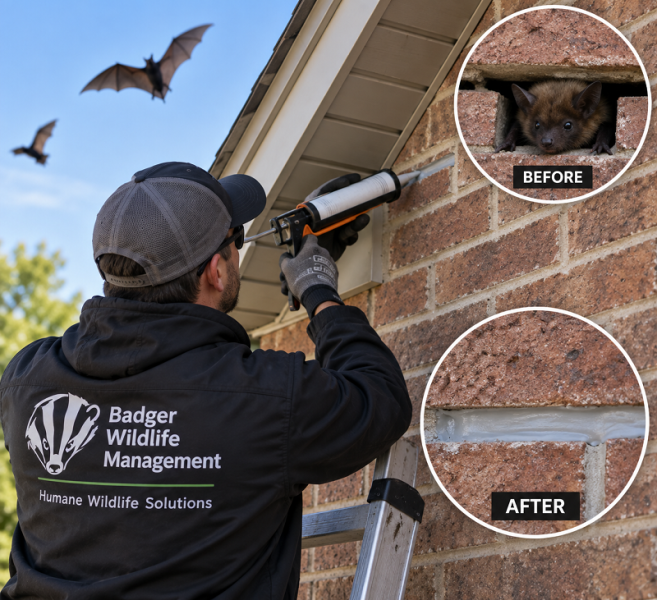
 Exterior brick masonry offers timeless durability and classic curb appeal for homes across Central Minnesota. However, the structural gaps inherent to brick construction—such as weep holes, mortar deterioration, expansion joints, and soffit gap closures—can quickly become invitations for nuisance wildlife.
When big brown bats or little brown bats search for roosting sites, a small gap in your brick veneer provides a warm, dark, and sheltered sanctuary. Addressing these openings requires specialized techniques: you must safely exclude the colony, repair the masonry gaps using ventilated, bat-proof materials, and protect your home’s moisture barrier.
Here is a complete guide to identifying, humanely removing, and repairing brick gaps to keep bats out for good, brought to you by Badger Wildlife Management.
Why Bats Target Brick Gaps
Masonry homes feature unique structural characteristics that bats exploit during spring, summer, and late autumn:
- Solar Thermal Retention: Brick absorbs solar heat throughout the day and releases it gradually overnight, creating an ideal thermal environment for bat roosts and maternity colonies.
- Micro-Entry Tolerances: A full-grown big brown bat can squeeze through a gap as tiny as 3/8 of an inch (roughly the height of a dime).
- Weep Holes & Mortar Gaps: Weep holes are essential openings left at the bottom of masonry walls to allow moisture inside the wall cavity to escape. Unfortunately, un-screened weep holes, cracked mortar, and gaps where brick meets wood soffits serve as direct highways into wall voids and attics.
Step-by-Step Process for Repairing Brick Gaps
Improperly sealing brick gaps can lead to severe structural issues, such as trapped moisture, rotting wood framing, or forcing bats deeper into your living spaces. A professional exclusion and repair plan follows a precise protocol:
- Perform a Micro-Gap Exterior Inspection
Locate primary and secondary access points around the masonry. Look for telltale signs of bat entry:
- Guano Staining: Dark, crumbling droppings clinging to the brick wall directly beneath a gap.
- Rub Marks: Dark, oily residue left by the oils in bat fur around tiny mortar gaps or soffit intersections.
- Acoustic Signs: Squeaking or scratching sounds coming from behind the brick veneer near dusk.
- Install One-Way Humane Exclusion Devices
Never apply caulk, mortar, or expanding foam directly over brick gaps while bats are actively inside. Trapping bats behind masonry causes them to die inside wall cavities—leading to foul odors and pest infestations—or forces them through interior drywall into your living space.
Wildlife specialists attach specialized one-way exclusion cones or mesh valves over primary brick entry points. This allows bats to exit to feed at dusk while blocking their return.
- Repair Secondary Mortar & Brick Gaps
While the one-way valve is active on primary exits, seal all secondary gaps around the masonry exterior:
- Mortar Repairs (Tuckpointing): Fill crumbling mortar joints and cracked brick seams with high-grade exterior masonry mortar or silicone-based masonry sealant.
- Brick-to-Soffit Intersections: Use 1/4-inch heavy-duty galvanized hardware cloth or custom aluminum flashing to seal gaps where top-course brick meets wood or vinyl soffits.
- Utility Penetrations: Seal openings around hose bibs, gas lines, and electrical conduits running through the brick.
- Install Ventilated Weep Hole Covers
Never seal weep holes solid with mortar or standard spray foam. Blocking weep holes traps moisture behind the brick veneer, leading to toxic mold growth, spalling brick, and structural wood rot.
Instead, install retrofitted stainless steel weep hole covers or specialized mesh inserts. These engineered covers maintain crucial air ventilation and drainage while creating an impenetrable barrier against bats, mice, and wasps.
The Danger of Bat Guano Behind Brick Walls
When bats roost inside brick wall cavities, their droppings (guano) and urine accumulate behind the veneer and inside wall insulation.
- Histoplasmosis Risk: Fungal spores (Histoplasma capsulatum) grow in accumulated guano and can cause serious respiratory illness if disturbed and drawn into HVAC systems.
- Odor & Staining: Urine saturates interior insulation and drywall, causing persistent odors and yellow-brown wall staining.
Professional wildlife technicians use specialized HEPA-filtered vacuum systems and EPA-registered antimicrobial treatments to sanitize wall voids and restore healthy indoor air quality.
Professional Brick Exclusion in Central Minnesota
Repairing brick gaps requires high-elevation roof work, precise masonry knowledge, and strict adherence to Minnesota state wildlife regulations regarding seasonal bat exclusion window dates.
Badger Wildlife Management provides complete, code-compliant bat removal and permanent masonry repair across Zimmerman, St. Cloud and surrounding Central Minnesota communities.
- Comprehensive Masonry Inspections: Identifying entry points, weep hole vulnerabilities, and structural gaps.
- Safe, Humane Exclusion: Installing custom one-way valves tailored to brick and stone surfaces.
- Permanent Brick Repairs: Tuckpointing, custom aluminum flashing, and stainless steel weep hole cover installation.
- Guano Remediation & Sanitization: Safe cleanup and antimicrobial treatments backed by a 3-Year Service Warranty.
Don’t let bats compromise your brick home’s integrity. Call Badger Wildlife Management today at (320) 250-5572 or visit badgerwildlife.com to schedule your consultation!